- Topic
- AI search, Local
- Reading time
- 8 min
- Written by
- Dima SmetaninCo-founder, SEENMETRIC
- Published
- 24 September 2026
GuidesAI search
Who AI actually recommends for your trade, and why
Ask AI to recommend a tradesperson or a professional near you and it names two or three, from a small pool of sources it actually trusts. Here is where that pool is, why aggregators often win the spot, and what it takes to be one of the names.
On this page
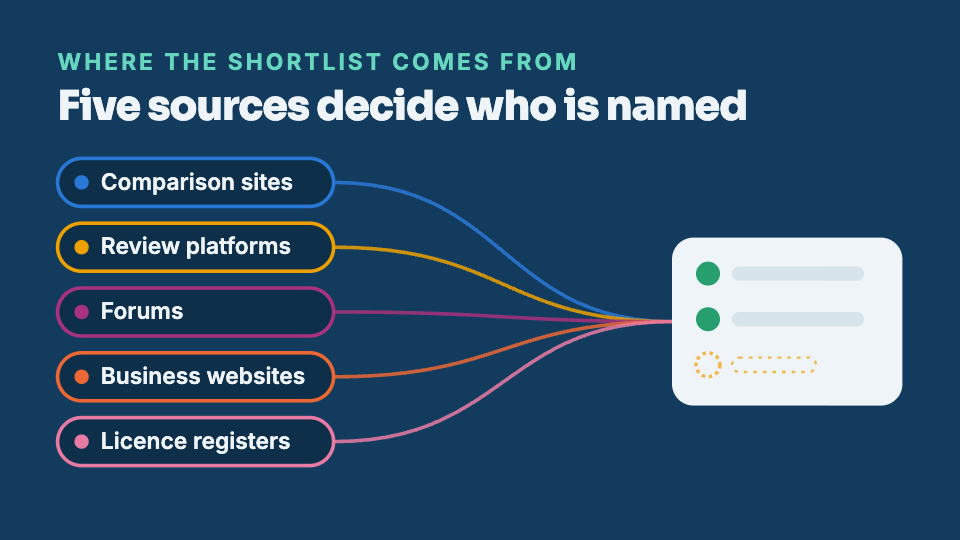
Ask an AI assistant to recommend an electrician in your suburb, a divorce lawyer in your city, or a vet near you, and it does not read the phone book. It builds a shortlist from a handful of sources it trusts, in a fairly predictable order. Knowing that order tells you exactly where your business needs to show up, and where it currently does not matter how good your website is.
The short version
- The shortlist comes from a small pool of sources. Comparison and quote sites, big review platforms, forums, and a few business websites that answer the question clearly on their own.
- Directories often get named because they did the comparing. A page on your own site that states what you charge, your turnaround and a real job gives an assistant something to quote instead.
- Your licence details should match the public register exactly. A mismatch usually gives no warning, but it makes your business quietly less likely to be the one the assistant settles on.
- You do not need to be the biggest business. You need complete directory profiles, a visible number of recent reviews, matching licence details, a page answering cost and turnaround, and a presence in local forums.
- Check your own trade in three assistants. Ask ChatGPT, Claude and Perplexity in a fresh session to recommend your trade where you work, and note who gets named.
Want to know where your business stands? Our Standard Audit reads up to 40 pages of your site, checks up to 300 Google searches you already show up for, sets you against up to three local competitors, and shows what ChatGPT says when customers ask up to 5 questions. A$149 one-off, delivered in two business days, no access to your site needed.
Get my Standard AuditThe shortlist comes from a small pool of sources
When an assistant answers a "best X near me" question, it is not weighing every business in the area against every other one. It leans on a handful of places that already do that comparison for it: comparison and quote sites, big review platforms, forums where people ask the same question and get real replies, and a smaller number of individual business websites that happen to answer the question clearly on their own. A business that is strong in none of those places is invisible to the answer, even if it is the best in the suburb.
Aggregators fill the gap real businesses leave
Comparison and quote sites exist because they answer the question in a format assistants can lift easily: a ranked list, a clear comparison, a page built around exactly the query someone would ask. Most individual business websites do not do this. They talk about the business in general terms and leave the comparing to the reader. An assistant fills that gap with whatever already did the comparison for it, which is why a directory or a quote-comparison site often gets named ahead of any single business it lists.
This is not a flaw to complain about. It is a gap you can close. A page that answers the comparison question directly, what you charge, how you compare on turnaround, what a real job looked like, is the kind of page an assistant can lift a sentence from instead of reaching for a directory.
Licensing and registers act as a quiet filter
For a licensed trade, an accreditation body, or a professional register, there is a second filter working underneath the answer. When an assistant names a tradesperson or a professional, it can cross-check the name against the public register for that licence or accreditation. A mismatch does not usually produce a warning to the reader. It just makes that business quietly less likely to be the one the assistant settles on, in favour of a name that matches cleanly.
This matters most for electricians, plumbers, builders, and other trades where a licence number is public record, and for lawyers and other professions with a searchable register. If your licence or registration details on your own site do not match what the public register says exactly, that mismatch works against you in a way you will never see in a browser.
What actually separates the named from the unnamed
Across the categories where this matters, a few things reliably separate a business an assistant names from one it skips.
- A profile on the comparison and directory sites people in that trade actually use, complete and consistent with the business's own site.
- A visible, specific volume of reviews, not just a star rating: the number of them and how recent they are.
- Licence or accreditation details that match the public register exactly, character for character.
- At least one page on the business's own site that answers a comparison question directly, in the assistant's own terms: cost, turnaround, service area.
- A presence, even a small one, in places people actually ask for recommendations: local forums and community groups, not just review sites.
None of this requires being the biggest business in the category. It requires being legible in the handful of places an assistant actually looks.
Being the best business in the suburb and being invisible to an AI answer are not in tension. They are simply different questions, and only one of them is about the work you do.
How to see this for your own trade
You can get a rough read on this yourself. Open ChatGPT, Claude and Perplexity in a fresh session, and ask each one to recommend your trade in your suburb or city, the way a customer actually would. Note who gets named, whether it is a business or a directory, and whether your own listing details match what you see. Our guide on checking if ChatGPT recommends your business walks through exactly how to do this and how to read the result, including why one check is not enough on its own.
For a fuller picture, an AI visibility audit runs this kind of test properly across the questions a potential customer might ask and every assistant your customers use, and checks whether your own licence and business facts line up with the public record. That is the difference between a rough read and knowing exactly what is keeping a competitor named instead of you.
Keep reading
Why ChatGPT recommends your competitor, not you
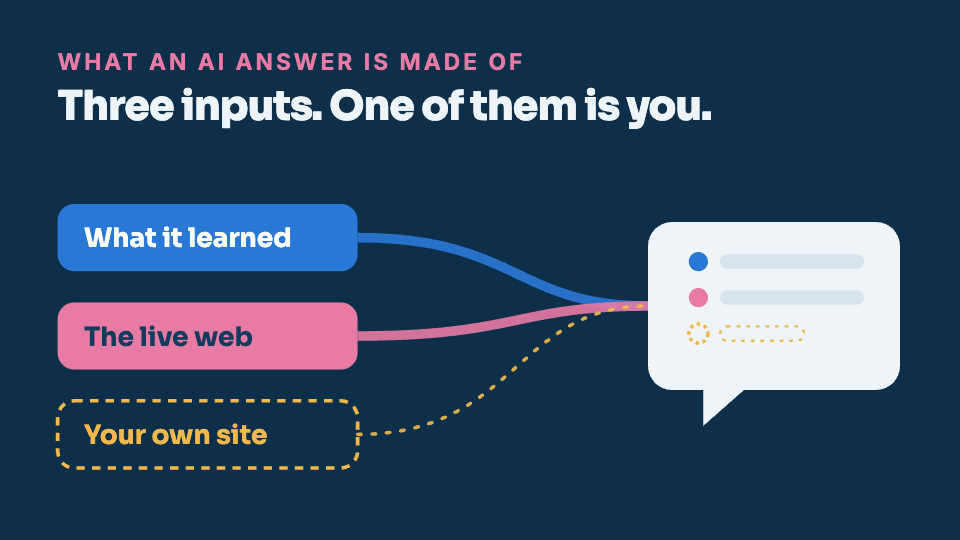
Ask an AI assistant to recommend a plumber, a cafe or an accountant in your area, and it will name a handful of businesses. If yours is not one of them, that is not bad luck. Here is what the answer is actually built from.
How do I check if ChatGPT recommends my business?
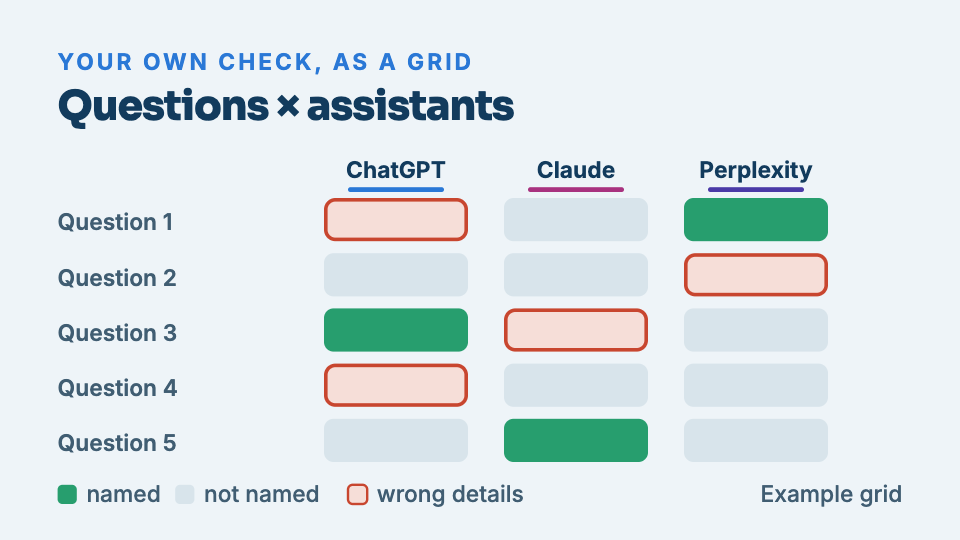
You do not need any tools or logins to find out what AI assistants say about your business. You need twenty minutes, the right questions, and a way to score the answers so one lucky result does not mislead you. Here is the whole method, step by step.